Mana
Earth AbidesMana is Ish’s name for the special power that people may believe belongs to particular members of a tribe. In the children’s post-disaster world, the idea gathers around Joey and Ish: Joey’s intelligence and daring make him seem exceptional, while Ish’s knowledge of the vanished world gives him an authority the children interpret as almost supernatural. The concept therefore connects leadership and learning to the fragile boundary between human ability and sacred reputation.
The idea of a special power
Ish recalls his anthropological studies and the widespread belief that certain members of a tribe possess a power within them, called Mana. He does not present this as proof that the power is real. Rather, it offers him a name for something he sees taking shape among the children: their sense that some people have an unusual capacity to act, know, or lead, beyond what ordinary explanations seem to account for.
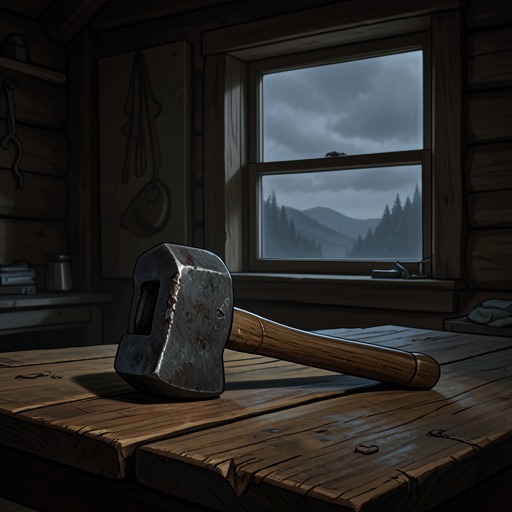
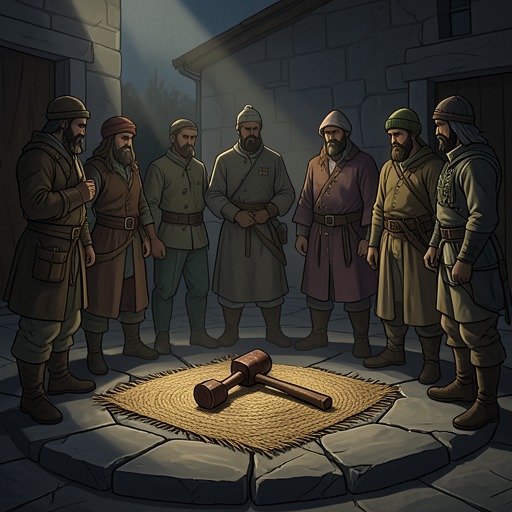
The children’s response to Ish’s hammer supplies the original example. They are afraid to pick it up, but accept Joey doing what they themselves do not dare. Ish remembers the incident because it seems to reveal more than Joey’s willingness to handle an object. In the children’s minds, some power appears to adhere to Joey, and Ish considers that Joey may believe in it too. The episode makes Mana a social perception with consequences: an object that inspires fear helps set one child apart from the others.
Ish also connects the idea to the problem of leadership. He wonders why some people become leaders while others, who may seem better qualified, do not. For him, Mana names a possible explanation for that uneven authority, but it does not settle the question. Its importance lies in the gap between visible qualifications and the influence that a group comes to recognize in someone.
Joey as a bearer of promise
Joey’s apparent distinction is not limited to the hammer incident. Ish sees strain in the boy’s efforts and notices how he reaches for the physical strength of boys two years older, who are naturally stronger. Joey has little in common with the younger children, and he neglects his twin, Josey; Ish attributes this partly to Joey’s age and partly to Josey’s lesser brightness. These observations give Ish a picture of a gifted child who is also socially out of step, not an idealized figure without limitations.
What gives Ish’s attention to Joey its weight is the future he sees in him. Ish believes that intelligence enabled humanity to rise to civilization and that the exercise of intelligence will be necessary for humanity to rise again. Joey possesses that intelligence, but his promise is not simply that he can acquire knowledge. At ten, he is beginning to experiment and discover things for himself; Ish notes that Joey had taught himself to read in this way. His development remains childish, yet it already includes initiative rather than mere obedience to instruction.
Ish cannot tell how much Joey understands about the regard forming around him. As summer progresses, however, he increasingly places the future’s hope in the boy. The thought of Mana gives Ish a vocabulary for Joey’s possible leadership, while his insistence on intelligence keeps that hope grounded in a human capacity that can be exercised and passed on. Even after discounting mysticism, Ish sees Joey as someone who might keep the tradition of human knowledge alive and transmit it onward.
Ish and the children’s reverence
Mana also reflects back on Ish. After the hammer incident, he studies the children’s shifting attitude toward him and sometimes senses the same awe they showed then. They regard him as possessing a special power of his own: he can handle the hammer, explain puzzling words and numbers, and describe places beyond their horizon. He knows of the world beyond the Golden Gate and of islands far out in the ocean beyond the Farallones, which the children sometimes see on clear days. Skills and knowledge that Ish regards as products of learning become, to children with little experience of the wider world, signs of extraordinary authority.
Ish recognizes that his intended explanation does not undo this interpretation. He tries to explain that Americans were ordinary people, not supernatural beings. The children instead understand his identity as confirmation: he knows how to read and write, teaches them about a round world and numbers, tells of distant places, and carries the hammer. To them, he is one of The Old People, a survivor from The Old Times whose knowledge seems to explain how the world was made. The explanation intended to make him ordinary strengthens his exceptional status because every example he gives confirms what they already believe about him.
Joey’s smile at this moment suggests that he recognizes a kinship with Ish. Like Ish, Joey can read, understands such knowledge, and can carry the hammer without being hurt. The moment draws the two figures together without making their positions identical: Ish has the accumulated knowledge of the lost world, while Joey represents a younger mind capable of learning and discovery. Ish ends the lesson by dismissing the school, unable to find another question or reply. The children’s interpretation has proved stronger than his attempt to correct it.
Knowledge, authority, and transmission
Mana holds together two explanations that Ish cannot fully reconcile. It may be a fallacy of simple minds, yet Ish acknowledges that even civilized peoples have recognized that some individuals seem to carry a special power associated with leadership. He does not abandon his skepticism; he questions whether Joey himself believes in Mana and asks what the boy understands about the role others may be assigning him. The uncertainty matters: the power is not established as supernatural fact, but neither can Ish dismiss the social reality of reverence and influence.
The concept also exposes how easily knowledge can turn into legend when the institutions and shared experience that once explained it have disappeared. The children have seen few people and know little of the larger world. Their unfamiliarity makes Ish’s ordinary abilities extraordinary to them, just as Joey’s literacy and daring distinguish him within their own community. Mana thus marks a transfer taking place alongside the transfer of knowledge: the children inherit lessons, but also form beliefs about the people who can teach them.
For Ish, the crucial possibility is that Joey might do more than represent special power in the children’s eyes. His intelligence, self-directed learning, and capacity to transmit knowledge could help preserve a human tradition. Mana gives that hope a mystical outline, but Ish’s deepest confidence rests on the work of thought and learning. The tension between those accounts defines the concept: a community may see a bearer of knowledge as extraordinary, while the future depends on whether that knowledge can be practiced, shared, and carried beyond the individual.